Authentic Carbonara Recipe
Introduction
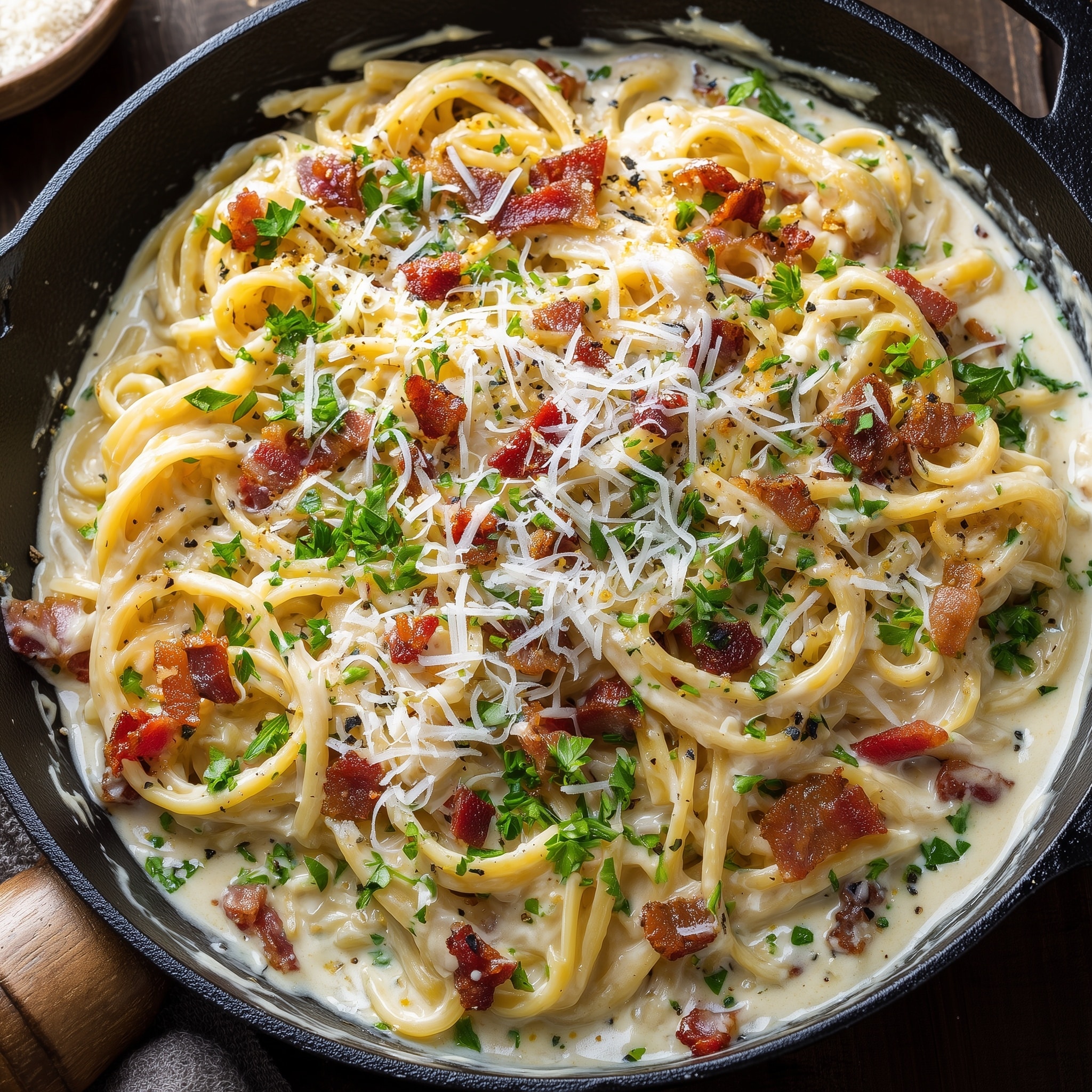
Authentic carbonara is a classic Italian pasta dish renowned for its creamy texture and rich flavors. Made with guanciale, eggs, pecorino romano, and pasta, this recipe delivers a deliciously indulgent experience that’s surprisingly simple to prepare at home.
Ingredients
- 340g guanciale
- 2 eggs, plus 5-6 egg yolks (freeze extra whites for another use)
- 150g pecorino romano, grated, plus extra to serve
- 400g mezzi rigatoni or spaghetti
- Freshly ground black pepper
- Salt, for boiling pasta
Instructions
- Step 1: Remove the rind from the guanciale and discard it. Slice the guanciale into ½ cm thick slices, then cut into thick strips. Fry the guanciale slowly over low heat for 10-15 minutes until it’s crisp and golden, allowing the fat to render out. Use a slotted spoon to transfer the guanciale to kitchen paper to drain, reserving half the fat in the pan and discarding the rest.
- Step 2: Whisk the eggs, egg yolks, grated pecorino romano, a good twist of black pepper, and the reserved guanciale fat together in a large heatproof bowl. Set the bowl over a pan of simmering water, making sure the bowl doesn’t touch the water. Whisk continuously for 2-3 minutes until the mixture thickens to a custard-like consistency. (If using a thermometer, aim for 64°C.) Be careful not to let the water boil to avoid scrambling the eggs.
- Step 3: Cook the mezzi rigatoni or spaghetti in a large pot of boiling salted water following the package instructions until al dente. Stir occasionally. Reserve a mugful of pasta cooking water before draining the pasta.
- Step 4: Return the drained pasta to the pan used for the guanciale and toss over low heat to coat it in the remaining fat. Remove the pan from the heat and stir in the prepared sabayon. Add a splash of reserved pasta water to loosen the sauce, tossing well to create a creamy, smooth coating on the pasta.
- Step 5: Add the crispy guanciale and plenty of freshly ground black pepper. Serve immediately in large pasta bowls. Top with extra grated pecorino romano to taste.
Tips & Variations
- Use guanciale for the most authentic flavor, but pancetta can be a substitute if unavailable.
- Whisking the egg mixture over simmering water gently cooks it to a safe temperature without scrambling.
- Reserve pasta water to adjust the sauce consistency—it helps create a silky texture.
- For a milder flavor, balance pecorino romano with some grated Parmesan.
Storage
Carbonara is best enjoyed fresh but can be stored in an airtight container in the refrigerator for up to 2 days. Reheat gently in a pan over low heat, adding a splash of water or cream to restore creaminess. Avoid reheating in the microwave to prevent curdling.
How to Serve
Serve this delicious recipe with your favorite sides.
FAQs
Can I use bacon instead of guanciale?
While guanciale is traditional and offers a unique flavor, bacon can be used as a substitute. Choose unsmoked or lightly smoked bacon for a closer taste to authentic carbonara.
Why is the carbonara sauce creamy without cream?
The creaminess comes from the emulsion of eggs, cheese, rendered fat from guanciale, and pasta water. Proper technique ensures the eggs cook gently to form a rich, silky sauce without needing cream.
PrintAuthentic Carbonara Recipe
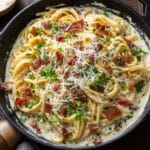
A traditional Italian carbonara recipe featuring crispy guanciale, a creamy egg and pecorino sabayon sauce, and perfectly cooked mezzi rigatoni or spaghetti. This authentic dish is rich, flavorful, and made without cream, relying on technique and quality ingredients to achieve its classic texture and taste.
- Prep Time: 10 minutes
- Cook Time: 20 minutes
- Total Time: 30 minutes
- Yield: 4 servings 1x
- Category: Main Course
- Method: Stovetop
- Cuisine: Italian
Ingredients
Meat
- 340g guanciale, rind removed
Eggs and Cheese
- 2 whole eggs
- 5–6 egg yolks (extra whites can be frozen for later use)
- 150g pecorino romano, grated, plus extra for serving
Pasta
- 400g mezzi rigatoni or spaghetti
Other
- Freshly ground black pepper
- Salt (for pasta water)
Instructions
- Prepare the guanciale: Remove the rind from the guanciale and discard it. Cut the guanciale into ½cm-thick slices, then into thick strips. Fry the guanciale slowly in a pan over low heat for 10-15 minutes to render the fat and achieve a crisp, golden texture. Remove the guanciale from the fat with a slotted spoon and drain on kitchen paper. Dispose of half the fat in the pan, keeping the rest for later use.
- Make the sabayon sauce: In a large heatproof bowl, whisk together the 2 whole eggs, 5-6 egg yolks, grated pecorino romano, a generous twist of black pepper, and the reserved guanciale fat. Place the bowl over a pan of simmering water, making sure the bowl doesn’t touch the water. Whisk continuously for 2-3 minutes until the mixture thickens to a custard-like consistency, ideally reaching 64°C. Avoid boiling the water to prevent scrambling the eggs.
- Cook the pasta: Bring a large pot of salted water to a boil and cook the mezzi rigatoni or spaghetti according to the package instructions until al dente. Stir occasionally. Reserve a mugful of the pasta cooking water before draining.
- Combine pasta and guanciale fat: Place the drained pasta back into the pan used to cook the guanciale. Toss the pasta in the remaining guanciale fat over low heat to coat thoroughly. Remove the pan from heat.
- Finish the sauce: Add the sabayon sauce to the pasta along with a splash of the reserved pasta cooking water to loosen the mixture and create a creamy, saucy texture. Stir and toss the pasta to ensure even coating.
- Add guanciale and serve: Fold in the crispy guanciale pieces and add plenty of freshly ground black pepper. Serve immediately in large pasta bowls, topped with extra grated pecorino romano cheese.
Notes
- Guanciale is a traditional cured pork cheek and is preferred over pancetta or bacon for authentic flavor.
- Be careful not to scramble the eggs when making the sabayon; keep water at a gentle simmer.
- Reserve some pasta cooking water to adjust the sauce consistency as needed.
- Use freshly grated pecorino romano for best taste.
- Extra egg whites can be frozen for other recipes to reduce waste.
- Serve immediately as the sauce can thicken and dry if left standing.
Keywords: carbonara, authentic carbonara recipe, guanciale, Italian pasta, pecorino romano, creamy carbonara sauce, traditional Italian pasta