Ohagi (Japanese Sweet Rice Balls with Anko, Kinako, and Black Sesame Coatings) Recipe
Introduction
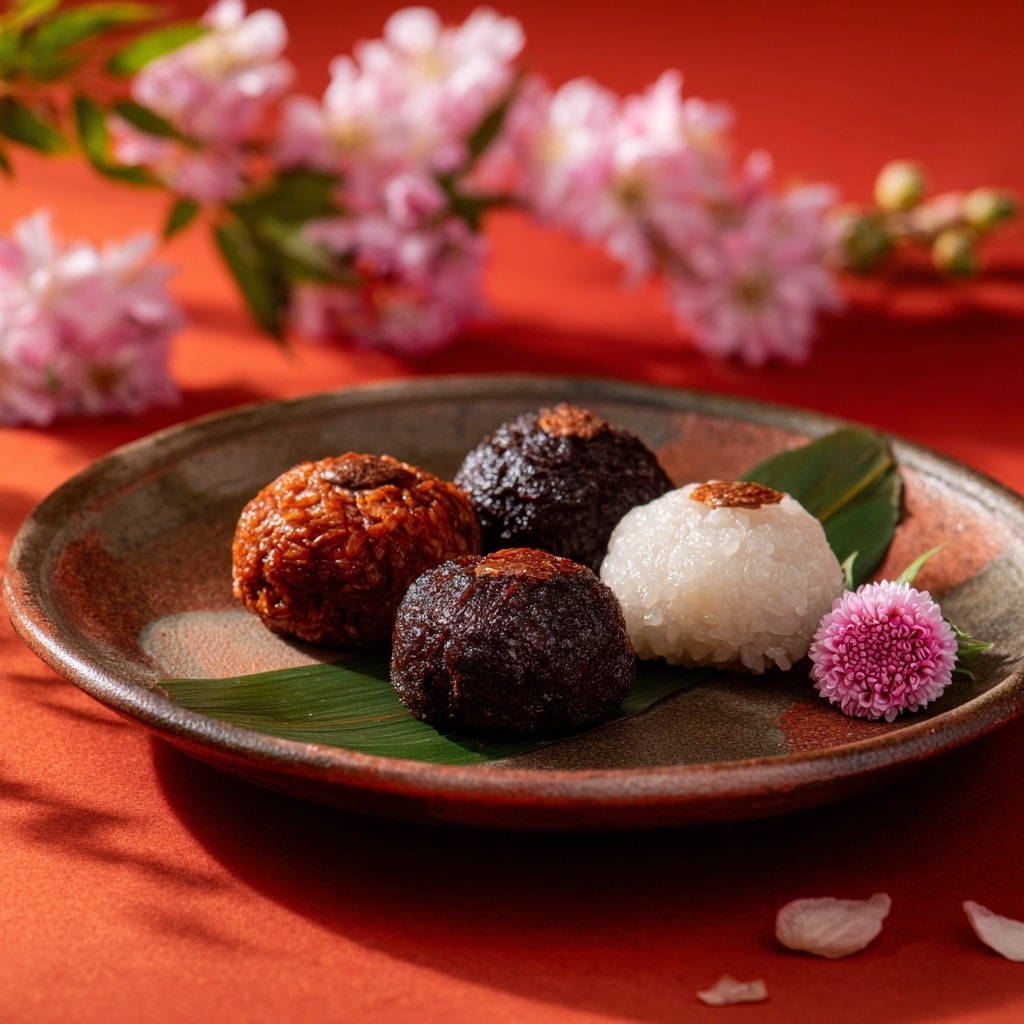
Ohagi おはぎ is a traditional Japanese sweet made from sticky rice and sweet azuki bean paste. This delightful treat is often enjoyed during autumn, offering a perfect balance of chewy rice and rich, sweet flavors. With simple ingredients and easy steps, you can make these classic rice cakes at home.
Ingredients
- 1 cup Mochigome sweet rice
- 1 cup Water
- 1 cup Anko sweet azuki bean paste
- 2 tbsp Kinako soybean powder
- 1½ tbsp Sugar
- Pinch of Salt
- 2 tbsp Roasted black sesame seeds
- 1½ tbsp Sugar
- Pinch of Salt
Instructions
- Step 1: Soak the glutinous rice in water for one hour to soften the grains and make cooking easier.
- Step 2: Drain the soaking water and transfer the rice to a rice cooker. Add 200ml of fresh water and cook according to your rice cooker’s instructions.
- Step 3: While the rice cooks, prepare the sweetened azuki bean paste if not already made. Store-bought anko works well for convenience.
- Step 4: Divide the anko into four equal-sized balls and set aside.
- Step 5: Once the rice is cooked, allow it to cool slightly until it can be handled safely.
- Step 6: Scoop about 50g of rice and shape it into a barrel shape using a bowl lined with plastic wrap. For anko-filled ohagi, use 30g of rice for a balanced size. You should make six 50g rice balls and four 30g rice balls in total.
- Step 7: Flatten one anko ball on plastic wrap and place a rice ball on top. Carefully wrap the rice ball completely with the anko.
- Step 8: For the kinako coating, mix soybean powder with 1½ tablespoons sugar and a pinch of salt. Spread the mixture on a flat tray and roll the remaining rice balls in it until evenly coated.
- Step 9: For the black sesame coating, roast the black sesame seeds in a pan until aromatic. Grind them using a mortar and pestle, then combine with 1½ tablespoons sugar and a pinch of salt. Spread on a tray and roll rice balls in the mixture to coat thoroughly.
Tips & Variations
- If you prefer a smoother texture, try mashing the rice slightly before shaping around the anko.
- Make your own anko by simmering azuki beans with sugar until soft and sweetened.
- For added flavor, sprinkle a little salt over the kinako or sesame powder to balance the sweetness.
- Use plastic wrap to help shape and wrap the ohagi neatly without sticking.
Storage
Ohagi is best enjoyed fresh but can be stored in an airtight container in the refrigerator for up to 2 days. Before serving, let them come to room temperature or warm gently by steaming to restore their soft texture. Avoid freezing, as it can change the rice’s texture.
How to Serve
Serve this delicious recipe with your favorite sides.
FAQs
Can I use regular rice instead of Mochigome sweet rice?
Regular rice won’t yield the same sticky texture essential to ohagi. Mochigome, or glutinous rice, is necessary for the chewy consistency that defines this treat.
Is anko paste gluten-free?
Yes, traditional anko paste made from azuki beans and sugar is naturally gluten-free, but always check store-bought versions for any additives if you have gluten sensitivities.
PrintOhagi (Japanese Sweet Rice Balls with Anko, Kinako, and Black Sesame Coatings) Recipe
Ohagi (おはぎ) is a traditional Japanese sweet made with glutinous sweet rice and sweet azuki bean paste. This recipe features three variations: azuki wrapped ohagi, kinako (roasted soybean powder) coated ohagi, and roasted black sesame seed coated ohagi. Soft, naturally sweet, and perfect for celebrations or as a delicious snack, these rice balls combine satisfying textures with authentic flavors.
- Prep Time: 1 hour 10 minutes
- Cook Time: 40 minutes
- Total Time: 1 hour 50 minutes
- Yield: 10 rice balls (6 kinako/sesame coated, 4 azuki wrapped) 1x
- Category: Dessert
- Method: Stovetop
- Cuisine: Japanese
- Diet: Vegetarian
Ingredients
Rice and Water
- 1 cup Mochigome sweet rice
- 1 cup Water (plus additional 200ml for cooking)
Azuki Bean Paste Filling
- 1 cup Anko sweet azuki bean paste
Kinako Coating
- 2 tbsp Kinako soybean powder
- 1½ tbsp Sugar
- Pinch Salt
Black Sesame Coating
- 2 tbsp Roasted black sesame seeds
- 1½ tbsp Sugar
- Pinch Salt
Instructions
- Soak Rice Grains: Soak the glutinous rice in water for one hour to soften the grains and ensure even cooking.
- Drain and Cook Rice: Drain the soaking water and transfer the rice to a rice cooker. Add 200ml of fresh water and cook according to your rice cooker’s instructions, usually by pressing “start.” Let it finish the cooking cycle.
- Prepare Azuki Bean Paste: While the rice is cooking, prepare your sweetened azuki bean paste (anko), either store-bought or homemade, to use as the filling for the ohagi.
- Divide Azuki Bean Paste: Portion the anko into 4 equal balls and set them aside for wrapping.
- Cool the Cooked Rice: After cooking, let the rice cool slightly until it can be handled comfortably without burning your hands.
- Shape Rice Balls: Using plastic wrap, scoop about 50g of rice and shape into a barrel shape for kinako and black sesame ohagi, or 30g for anko wrapped ohagi to keep sizes consistent. You will make approximately 6 balls of 50g and 4 balls of 30g.
- Wrap Rice Balls with Azuki Bean Paste: Flatten an anko ball on plastic wrap in your palm, place a rice ball in the center, and carefully wrap the anko around the rice ball ensuring full coverage.
- Roll Rice Balls in Kinako: For the kinako coating, mix kinako powder with sugar and a pinch of salt. Spread this mixture on a flat tray, then roll the rice balls thoroughly in the kinako mixture to coat evenly.
- Roll Rice Balls in Black Sesame: Roast black sesame seeds in a frying pan over medium heat until aromatic. Grind the roasted seeds using a mortar and pestle, then mix with sugar and salt. Spread on a flat tray and roll rice balls in the black sesame mixture until fully coated.
Notes
- Soaking the rice is essential to achieve the correct texture for ohagi.
- Use plastic wrap to help shape rice balls neatly without sticking.
- Adjust sugar to taste in the kinako and sesame coatings if you prefer less sweetness.
- Roasting sesame seeds freshly enhances their aroma and flavor significantly.
- Ohagi can be stored in the fridge for up to 2 days but are best enjoyed fresh.
Keywords: Ohagi, Japanese dessert, Mochi rice balls, Azuki bean paste, Kinako coating, Black sesame, Traditional Japanese sweets, Glutinous rice recipe